
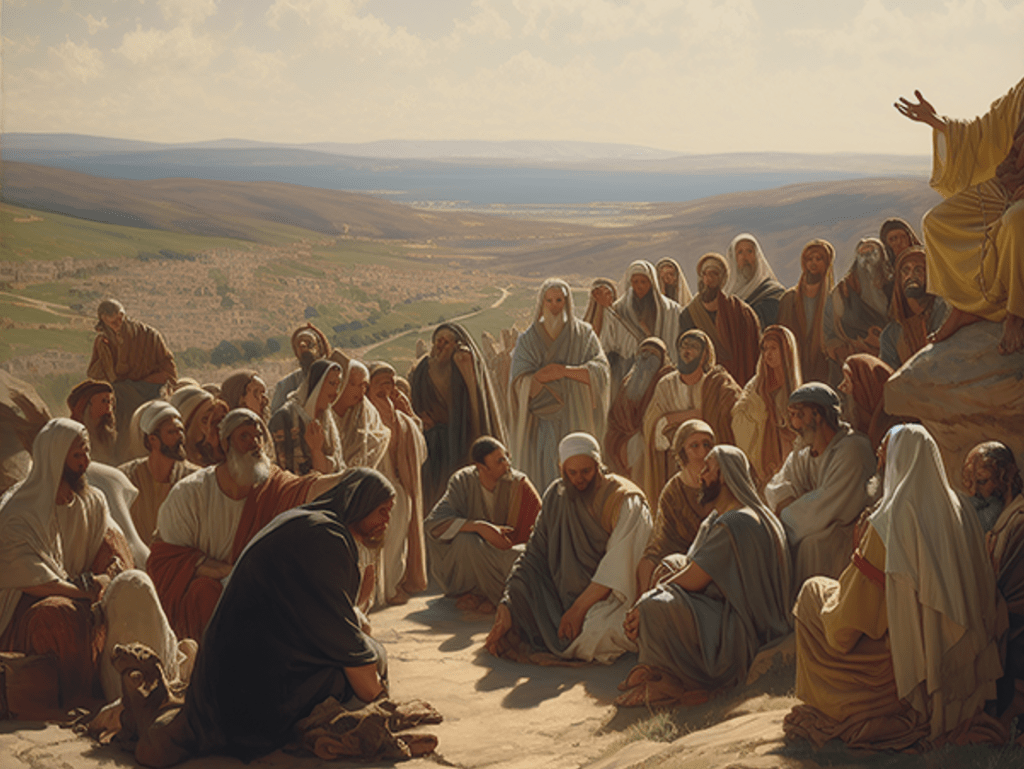
PART 1: A General Introduction to The Teaching of Christ
Reading: 2 John 1:1-13
Focus Text: 2 John 1:9-11
“Anyone who runs ahead without remaining in the teaching of Christ does not have God. Whoever remains in His teaching has both the Father and the Son. If anyone comes to you but does not bring this teaching, do not receive him into your home or even greet him. Whoever greets such a person shares in his evil deeds”.
Introduction to Part 1
The foundation on which a Christ-centred church must stand is clearly shown in this brief and somewhat neglected second letter by John the Apostle. This letter is revealing to us what it is by which a church stands and what it is by which it falls. Any church which does not put into practice what is contained in this letter will soon cease to be a Christian church and become either a sect, a cult or a synagogue of Satan.
Yet, it has to be said — and I am ashamed to say it — that the majority of churches which profess to be ‘Christian’ — and even the majority of people who profess to be ‘Christians’ — would completely disregard the advice in this letter, either because of their unawareness of its importance or because of wilful disobedience.
Now, the central verse in this letter is verse 9: “Anyone who runs ahead without remaining in the teaching of Christ, does not have God. Whoever remains in His teaching has both the Father and the Son” (2 John 1:9).
The key here is the phrase “the teaching of Christ”. What is this teaching? How are we to identify it? The Greek word here, διδαχή, didaché, means “teaching”, in the sense of a clearly laid out set of teachings given by word of mouth as a body of indispensable truth. It is also “teaching” in the sense of being instruction as fact. It is the means by which one comes to know that truth (see verses 1-2, where truth is mentioned three times!). And this “teaching of Christ” is subjective —that is, it refers to the teaching which Christ actually taught, rather than teaching which is about Him. In the New Testament it refers to the whole teaching of Christ, as in Matthew 7:28: “When Jesus had finished saying these things, the crowds were astonished at His teaching”. This is also the meaning in John 7:14-17:
“About halfway through the feast, Jesus went up to the temple courts and began to teach. The Jews were amazed and asked, ‘How did this man attain such learning without having studied?’ ‘My teaching is not My own,’ Jesus replied. ‘It comes from Him who sent Me. If anyone desires to do His will, he will know whether My teaching is from God or whether I speak on My own’”.
John 7:14-17
“The teaching of Christ” refers to everything that Christ taught. Ultimately, it refers not only to what He taught Himself but also what He went on to teach through His Apostles. So the New Testament stress is on God’s teaching through Jesus Christ and through the Apostles who continued with it. As the Lord Jesus revealed to His Apostles:
“I still have much to tell you, but you cannot yet bear to hear it. However, when the Spirit of truth comes, He will guide you into all truth. For He will not speak on His own, but He will speak what He hears, and He will declare to you what is to come. He will glorify Me by taking from what is Mine and disclosing it to you. Everything that belongs to the Father is Mine. That is why I said that the Spirit will take from what is Mine and disclose it to you”.
John 16:12-15
The teaching of Christ continued to be delivered after His earthly pilgrimage had finished: “The Holy Spirit will take from what is Mine and disclose it to you”. Now, if we wanted to show the fullness of the teaching of Christ we would turn both to what Christ taught in the Gospels, and also to what His Apostles taught in the rest of the New Testament.
However, a wedge is often driven by people between what Christ taught and what the Apostles taught. This is especially the case with the liberal critics of the Bible, who try to show that Christianity was invented by the Apostle Paul and the other writers in the New Testament. These critics say that Jesus just taught love and peace and was a kind of hippie, a communist or Che Guevara style of revolutionary socialist who campaigned for diversity, equal opportunities for all and who wanted the whole world, as it is presently constituted, to be happy and live in blissful harmony. They frequently misquote Christ’s sayings, take them out of context and thereby try to show that the Apostles (especially Paul) were just rabbinic fanatics who misunderstood Christ’s teachings entirely, and subsequently invented a religion all of their own. According to them, Christianity is merely a world religion which has continued what Paul and his associates started and has nothing whatsoever to do with the genuine teachings of Christ. (The Gnostics, of course, also said that the real teachings of Christ were not in the canonical Bible but in their own “Gnostic Gospels”, as the New Agers of today also claim, who are themselves the modern neo-Gnostics).
Notice that John speaks of those who “run ahead”. The Greek word there is προάγω, proagó, which Strong’s says means “to go further than is right or proper… to transgress the limits of true doctrine”. Running ahead. Putting oneself ‘beyond the pale’. Setting oneself up as the discoverer of some alleged great new teaching which the church has been lacking for centuries. What a lot of heartache that has caused in the churches over the centuries. This is how the widespread ‘freewillism’ in the churches comes about. This is how something as nutty as the so-called ‘Rapture’ teaching comes about. Or gibberish so-called “tongues” and the phony “baptism in the spirit”, which were Pentecostal inventions in 1906 in Azusa Street, Los Angeles, and have since caused such stupidity and divisions in the Christian scene. Or an alleged future thousand-year reign of Christ on this earth as it is presently constituted. All these wacky teachings, and many more bandwagons, have come about through someone “running on ahead”, getting ahead of themselves, setting themselves up as inventors and innovators of some “wonderful new teaching” which the church had been missing up until then. Thus, they are on a par with Jehovah’s Witnesses and Mormons in the invention of the wacky new teachings category. Even a great many new converts these days do not think they need much in the way of teaching or to be under the ministry of a teacher. They pick up a few ideas off the internet and away they go — running on ahead without any firm foundation other than their testimony of which they are so proud and about which they continually brag. That soup of subjective experience is a recipe for shipwreck sooner or later.
Such has been the work of all those who do not ‘remain in the plain teaching of Christ’ and which has, above all, also given rise to the massive body of teaching known as ‘liberalism’.
An example of the liberal view of the teaching of Christ occurred when a Church of England Bishop said on the BBC Radio 4 programme ‘Thought for the Day’ that Christmas was an occasion reminding us of the needs of the poor and hungry, and he quoted Luke 6:20-21, where Jesus said to His disciples: “Blessed are you who are poor, for yours is the kingdom of God. Blessed are you who hunger now, for you will be filled”. This misses the point entirely, because the Lord Jesus was referring there primarily to spiritual poverty and hunger — the “poor in spirit” who seek spiritual riches, Matthew 5:3, and those who “hunger and thirst for righteousness” of the objective, personal kind, Matthew 5:6 — rather than those who suffer any kind of material or physical deprivation. But this is a classic misrepresentation, ultimately leading to what has become known as “Liberation Theology” or the “Social Gospel”. The result of this is that a wedge is hammered between the teaching of Jesus and that of the Apostles, as if they taught different things — indeed, a wholly different religion. It is important for liberals to drive this wedge home, because Jesus’ teaching (as they understand it and twist it) can then be made comparable to their own; whereas the teaching of the Apostles is considerably more difficult to manipulate in this manner.
Now in order to prove these claims wrong — that there is no difference between Christ’s teaching and that of the Apostles, and that the Apostles’ teaching was just an extension and deepening of what Christ had already taught during His ministry on earth — I would like to focus on the teaching of Christ as Christ taught it. “Take My yoke upon you and learn from Me; for I am gentle and humble in heart, and you will find rest for your souls” (Matthew 11:27).
“If anyone is ashamed of Me and My words in this adulterous and sinful generation, the Son of Man will also be ashamed of him when He comes in His Father’s glory with the holy angels”.
Mark 8:38
This “teaching of Christ” is the basis of a Christ-centred church and it is teaching for which it has no shame. So, in this three-part exposition I want to show exactly what that teaching is, from His own lips, and demonstrate that it perfectly matches the teaching taught by all the Apostles. After this introductory Part 1, we will go on to look in the remaining Parts 2 and 3 at Jesus’ teaching of creation, His teaching of the Fall, and His teaching of Scripture. [Future CyberSermons will focus on Christ’s teaching of salvation, His teaching of election and predestination, and His teaching of the Last Things (the end of the world, heaven and hell)].
But before we get into the meat of those subjects around the teaching of Christ in Parts 2 and 3, I want to look here in this introduction at a few other introductory elements that we can learn from the second letter of John which point us to the central importance of that teaching.
The first introductory element which can be said about the teaching of Christ is that
1. It Provides the Only Antidote to False Teaching
“Now I urge you, dear lady—not as a new commandment to you, but one we have had from the beginning—that we love one another. And this is love: that we walk according to His commandments. This is the very commandment you have heard from the beginning, that you must walk in love. For many deceivers have gone out into the world, refusing to confess the coming of Jesus Christ in the flesh. Any such person is the deceiver and the antichrist”.
2 John 1:5-7
The Two Indispensable Foundations of Christian Unity
Ironically, most professing Christian churches would regard the advice in this letter as potentially divisive, especially because of John’s command in v.10 to separate oneself from false teaching (as we shall see shortly when I write more about that below). I say “ironically” because the Apostle John actually reveals that by putting into practice the advice in this letter, churches will be demonstrating that they are living in true Christian unity! True Christian unity is based on two indispensable foundations, and unless these two things are practiced properly there can be no genuine unity. The two indispensable Christian foundations are genuine love and objective truth. Real Christians who desire real unity must demonstrate both of these qualities:
“I was overjoyed to find some of your children walking in the truth, just as the Father has commanded us. And now I urge you, dear lady—not as a new commandment to you, but one we have had from the beginning—that we love one another. And this is love: that we walk according to His commandments. This is the very commandment you have heard from the beginning, that you must walk in love.
2 John 1:4-6
Now this genuine love and objective truth only carry weight when they are rooted in the teaching of Christ, as we can see here. It is not a sentimental love or political truth which is being referred to here. The truth in which John rejoices is truth which involves obedience to God’s moral law (v.4b). For, as we saw in my previous publication, “From Servitude to Sonship”, the summation of the law is love. John says that love is to “walk in His commandments”. The Lord Jesus said: “This is My commandment, that you love one another as I have loved you” (John 15:12). This is the essence of all Divine commandment. The Lord Jesus — who is the mouthpiece of the Father (“everything I have learned from My Father I have made known to you” (John 15:15) — clearly stated that the greatest commandments are the love of God and the love of one’s fellows (Matthew 22:34-40). The love which John commends involves conformity to the will of God (v.6). This is totally different from the understanding of love and truth which the world has, and which even many professing Christians have today.
Much of the modern talk about church unity rests only in a vague and maudlin kind of love and deliberately ignores the profound body of truth encapsulated in the commandments of Scripture. Indeed many who constantly bleat about “the need for unity” would regard John’s idea of love and truth expressed in this letter as being wholly divisive! Likewise, if they really understood the teaching of Christ as He taught it, they would be equally offended at His words. But because Scripture-twisters are always selective in their use and application of the Bible, they can weave for themselves a pick ‘n mix religion which ignores genuine love and truth entirely — although they would never see it that way.
However, we are left in no doubt whatsoever here that the love and truth to which the Apostle is referring is rooted absolutely in the teaching of Christ. If one does not practise the love, or adhere to the truth, which is rooted in that teaching, he or she will ultimately flounder. That is the whole thrust of the Apostle’s teaching in this important letter.
If I may remind you again of our first heading here: ”The Teaching of Christ is the only antidote to false teaching”. That is what the Apostle is saying. For after speaking of the truth and love which is based on the commandments of God (and thereby also in the teaching of Christ), he immediately says: “For many deceivers have gone out into the world, refusing to confess the coming of Jesus Christ in the flesh. Any such person is the deceiver and the antichrist” (v.7). Significantly, the Greek word which is usually translated as “for” at the beginning of v.7 is ὅτι, hoti, which actually means “because”. In other words, John is saying that it is precisely because there are so many antichristian deceivers around that it is all the more radically important to live in conformity to the love and truth which are rooted in the teaching of Christ, because these will provide the antidote to all forms of deception. The kind of church unity which comes about through walking in that genuine love and truth is the only antidote to the deception which swirls around the church and threatens to engulf it like an impenetrable fog.
Now the corollary of this is that if one does not walk in conformity to that kind of love and truth, then one will inevitably fall prey to the multitude of deceivers and antichrists which walk this earth, and which John specifically mentions in his previous letter: “It is the last hour; and just as you have heard that the antichrist is coming, so now many antichrists have appeared. This is how we know it is the last hour” (1 John 2:18).
The term, “the last hour”, refers to the same time period as “the last days”. It refers to this entire age from the time of Christ’s ascension to His second coming. This whole cosmic theatre was wrapped up with His crucifixion, resurrection, and ascension. All that remains during this present age is for the full number of His disciples to be brought in. John is saying that we know that this is the final age of this present creation (the last hour”) because of the huge proliferation of what John is effectively referring to as “mini-antichrists”, along with the reality that this world is building up to the revealing of the final manifestation of antichrist — the Antichrist. What John calls “the spirit of the Antichrist” (1 John 4:3) is the denial of the reality of Christ in the flesh. This is synchronous with, and a manifestation of, what the apostle Paul refers to as “the mystery of lawlessness” (2 Thessalonians 2:7) which inexorably leads throughout this age to the revealing of the Antichrist. [NB: The original Gnostics denied that Christ had come in the flesh, just as the neo-Gnostics of today (New Agers, etc.) talk about an internal “Christ Consciousness” which can be plugged into via techniques, rather than the reality of the Christ having come in the flesh as the Saviour of His people who actually died, rose again and ascended to heaven].
So, the plain logic of what John is saying is that if one does not walk in conformity to the kind of love and truth to which he is referring, then one will inevitably fall prey to the multitude of deceivers and antichrists which walk this earth. Just read verses 5-7 of John’s Second Letter to appreciate that.
Now if we apply this logic to church life today, with its woolly ecumenical movements, its fudged commissions, its lack of in-depth didactic teaching, its over-emphasis on subjective feelings and superficial manipulated emotions rather than on objective truth and love, it is hardly surprising that so many churches and Christian organisations are overrun by deceivers and mini-antichrists!
So that is the first lesson about the teaching of Christ which we can learn from John’s second letter — and this is before we have even looked at the content of the teaching of Christ which forms the basis of this letter!
The second introductory word which can be said about the teaching of Christ is that
2. If We Fail to Comprehend its Full Importance, that May diminish our Future Reward in Heaven
v.8: “Look to yourselves, that we do not lose those things we worked for, but that we may receive a full reward”.
The Apostle is not referring to the loss of salvation here, as it is impossible for the genuine believer to lose that mighty gift (see John 10:28-29; Philippians 1:6, etc.). Instead, he is making reference to the rather sobering fact that — just as there will be degrees of condemnation for those who have refused Christ — there will also be degrees of reward in glory for believers, according to their level of faithfulness and work for the Lord in this life. [NB: Those who want to know in more detail about this sobering teaching, which is rarely dealt with in the churches, can consult my free-to-download commentary on the Book of Revelation, “The Essential Apocalypse”, and read pages 582-591 which deal with this in detail. Just click on the title to go there]. This has nothing whatsoever to do with earning salvation by works (for salvation itself is a free gift), but it refers to the degree of reward for works for the saved believer. The manner and degree to which we have exercised wisdom (Dan.12:2), the extent to which we have responsibly evangelised (Dan.12:3), the fullness in which we have used the gifts we have been given by the Lord (James 3:1; Luke 19:12-19) — all these and more will be weighed in the balance and taken into consideration when assigning our future roles in eternity for the Lord. Some will merely, as it were, scrape into heaven by the skin of their teeth as a result of lost opportunities (1 Corinthians 3:12-15). Others will receive the ”full reward” to which John is referring here in v.8 of our text.
It is therefore plain from Scripture that such degrees of reward will be allotted to us. We can even learn this from the fact that even amongst the spirit world of the angels there are “thrones or dominions or principalities or powers” (Colossians 1:16), archangels (1 Thessalonians 4:16; Jude 9) and other orders of being (Genesis 3:24; Isaiah 6:1-7). If there are such levels of power and command among the angels, is it not most likely that there will also be such amongst us when we attain to the world of spirit in our life in the age to come?
If this is so, then we have an incentive to look after ourselves and our souls, so that “we do not lose those things we worked for, but that we may receive a full reward”. We can just ‘bottom along’, as many do, and achieve less for ourselves in the afterlife; or we can excel in our journey on earth and receive a fuller reward. Our dedication to the teaching of Christ will stand us in great stead for that achievement.
The third introductory word which can be said about the teaching of Christ is that
3. Failure to Adhere to the Teaching of Christ Reveals Atheism
v.9: “Anyone who runs ahead without remaining in the teaching of Christ, does not have God”.
This is not a statement about which there can be any equivocation. “Who does not remain in the teaching of Christ does not have God”. Whoever does not live, work, move, think and speak on the basis of the teachings of Jesus Christ cannot possibly have any kind of relationship with God.
Again, this verse is not referring to the possibility of genuine believers losing their salvation (for that would be impossible) but is speaking of those who have been involved in the church in some way, but who have turned aside and failed to remain faithful to the teaching of Christ. It is not backsliding which is being referred to here but outright apostasy — the same kind of apostasy which is referred to in Hebrews 6:4-6. This is not the loss of salvation but simply the revealing of the hearts of those who never really believed in the first place. [NB: This passage in Hebrews is worthy of a full exposition itself; but I only mention it in passing here. To know more, please see the relevant section of my article on the subject, “Do Not Shrink Back: An Exposition of Hebrews 6:19-39”]. God can be found only in and through the Son of Man and Son of God, Jesus Christ. Those who claim to believe in God cannot do so unless they believe that this God is “the Father of the Son”, and that Jesus Christ is “the Son of the Father”. Failure to believe this and abide in that belief is the religion of Antichrist. “Truly our fellowship is with the Father and with His Son Jesus Christ” (1 John 1:3)
“Who is the liar, if it is not the one who denies that Jesus is the Christ? This is the antichrist, who denies the Father and the Son. Whoever denies the Son does not have the Father, but whoever confesses the Son has the Father as well. As for you, let what you have heard from the beginning remain in you. If it does, you will also remain in the Son and in the Father. And this is the promise that He Himself made to us: eternal life”.
1 John 2:22-25
What rich teaching and spiritual advice this is! So we can see why John says in our letter that “He who remains in the teaching of Christ has both the Father and the Son” (v.9). Anyone, therefore, who denies that Jesus is the eternal Son of God, has not the Father — has not God.
The teaching of Christ is the teaching of God — it is godly teaching. To be without it is to be in a state of atheism.
The fourth introductory word which can be said about the teaching of Christ is that
4. Separation from those who Eschew the Teaching of Christ is Infinitely Preferable to False Unity with Them
vv.10-11: “If anyone comes to you but does not bring this teaching, do not receive him into your home or even greet him. Whoever greets such a person shares in his evil deeds”.
What a hard saying this is! Many have attempted to perform some extraordinarily contortionistic acrobatics at this point. It is important to understand what John is commending here. He is not speaking about ostracising an unbeliever who does not have the teaching of Christ. For all unbelievers do not have such teaching; and Christian hospitality is essential if we are to make any headway evangelistically.
This verse concerns professing Christians who have set themselves up as teachers, but who not only fail to teach the whole counsel of God as revealed in the teaching of Christ, but they are also the ”deceivers” referred to in v.7, and the Apostle is counselling us concerning the danger of having anything whatsoever to do with such people. This is a direct counteraction to those who would say: “Judge not, that you be not judged”, every time a Christian exercises such discriminating discernment in his or her choice of friends and associates, or every time a church does so with its admittance of congregants. The exercise of such judgement — if conducted righteously — is essential.
What does this warning about the need for separation show us? I have three observations to make in this respect. It shows us, first,
i. The Pervasive Nature of False Teaching and False Teachers
Separating ourselves from these deceivers doesn’t begin in the living room, the kitchen or even the bedroom (God forbid!). Instead, it begins on the doorstep, or even at the gate. “Do not receive him into your house nor greet him”. That is serious separation; and it demonstrates the highly pervasive nature of false teaching and false teachers. Now perhaps we can understand to what Paul is referring when he says: “A little yeast works through the whole batch of dough” (Galatians 5:9; cf. 1 Corinthians 5:6-7). That is all it takes to affect the whole thing. So we have to deal with it. Decisively and thoroughly. The Lord doesn’t mind us using a sledgehammer to crack this kind of nut, because He knows very well that little nuts become big trees when they fall on fertile soil.
Another thing that John’s warning about the need for separation shows us is…
ii. The Terrible Personal Reality of Doctrinal Contamination
v.11: “Whoever greets such a person shares in his evil deeds”.
It is not enough to refuse their teaching. One must also not even give them the least inroad into one’s life — not one iota. This may be very surprising to many people because they underestimate their own susceptibility to contamination from such folks. But merely greeting the deceivers, giving them the time of day in any sense, acknowledging them as worthy of greeting, is something which can lead to the contamination of the one who does so, and makes him or her tantamount to a collaborator (see Ephesians 5:11; 1 Timothy 5:22b; Revelation 18:4). I hope that readers know how important this is. It takes courage to stand up to such characters because they can be so seductive and their ability to deceive and ‘gaslight’ other people is off the map — not to mention the way that they can malign and slander those who reject or expose them.
Another thing that John’s warning about the need for separation shows us is…
iii. The Need for Continual Vigilance
“I urge you, dear lady…” (v.5), “Watch yourselves…” (v.8). How serious is the Apostle’s tone as he writes this important but neglected letter. If I may quote Prof. Lenski here in loc:
“The state locks up murderers, thieves and criminals as a matter of protection. Is the church to aid and abet spiritual murderers and thieves? Not for one moment — all maudlin sentiment in the state and the church to the contrary notwithstanding”.
If a church cannot rid itself of false teachers and their teachings, then the faithful must come out from among them (2 Corinthians 6:17; Revelation 18:4).
Conclusion to Part 1
This second letter of John has a great bearing on churches today. How many churches and individuals have fallen prey to falsehood through a failure to implement what John is warning us of here? Preserving purity is a serious work which is entirely underestimated by so many churches and individual believers today. Not receiving deceivers and false teachers, or even greeting them, does not seem to come easy for many. In fact, in a great many churches today, one is far more likely to be treated with suspicion if one is preaching unadulterated truth rather than spreading honeyed lies! Is that not so often the case? So many become sentimental and charitable, exercising a misplaced grace. Perhaps we can therefore see why the mainstream denominations and the majority of churches today are almost completely ruled by men and women who do not have the teaching of Christ but are pursuing their own shibboleths and pet ideas.
What is our response to this? The joy of the Apostle’s heart was that those who profess Christ should be “walking in the truth” — that is, have the teaching of Christ, live it, love it, and proclaim it (v.4). That should also be the express joy of every elder, minister, pastor and teacher today as they impart with love the truth of the Gospel and the courage of conviction in the spiritual battle which is now upon us and which lies before us in the future, ever more intensified with each new day.
In the subsequent few messages, we will discover the content of the teaching of Christ and see that what the Lord Jesus taught was the same teaching as that taught by the Apostles who came afterwards.
PART 2: The Teaching of Christ on The Creation & the Fall
First Reading: Deuteronomy 18:15-22
Second Reading: Hebrews 1:1 – 2:4
Focus Text: Deuteronomy 18:19
Introduction to Part 2
In Part 1, we began our journey into “the teaching of Christ” that is referred to in 2 John 1:9-11. We saw how the Apostle plainly said that anyone who claims to be a Christian teacher but who does not have this teaching should not only be refused entrance into our homes and churches but should also not even be given so much as a passing greeting. To do so would be to “share in his evil deeds” (2 John 1:11), i.e. to be a collaborator.
Irenaeus of Lyons, in his vast and important work, “Against Heresies” (AD 182-188), reported a story from Polycarp about the Apostle John which illustrates this approach to the purity of life and teaching. He was reputedly bathing at the baths in Ephesus when he discovered that the Gnostic heretic, Cerinthus, was also bathing there. Irenaeus reports it like this:
“John, the disciple of the Lord, going to bathe at Ephesus, and perceiving Cerinthus within, rushed out of the bath-house without bathing, exclaiming, ‘Let us fly, lest even the bath-house fall down, because Cerinthus, the enemy of the truth, is within’”.
He wouldn’t even share house space with him, so seriously did he treat false teaching. Do you think that his attitude was bigoted or over-reactionary? Do you think that John set the cause of ecumenism back hundreds of years? Or can you understand such thinking?
I wonder if we really grasp the importance of the teaching of Christ? I mean really understand it? I am speaking here about the entire body of Christian truth as taught uniformly by Christ and His specially-commissioned Apostles — most especially the content of the Gospel, which is vastly more expansive than many evangelists seem to realise.
Apart from demonstrating the importance of the teaching of Christ, my purpose here in this 3-part CyberSermon is to show that the basic elements of this teaching appear in the teachings of the Lord Jesus Christ Himself. A number of people have tried to put a wedge between the Lord Jesus and His apostles. They say that His apostles (especially Paul) were the founders of a “divisive” faith community called Christianity, whereas Jesus came to bring the world together in love and peace and encourage us to feed the hungry and clothe the poor. Of course, this is all so wide of the mark, as I will show.
The same people who try to hammer home this divisive wedge also fail to comprehend the full height, width and depth of the teaching of Christ. For they try to force His words to fit into their own interfaith agenda or political manifesto. They have never really listened to Him. And we do need to listen really carefully to what the Lord Jesus tells us. His teaching is vital. “For this reason I was born and have come into the world, to testify to the truth. Everyone who belongs to the truth listens to My voice” (John 18:37). Plainly, on Jesus’ own admission, anyone who is into the truth will receive His teaching. His “voice” is actually what constitutes the teaching of Christ. “Everyone who belongs to the truth listens to My voice”. Everyone who is a lover of truth will have, hold and adhere to the teaching of Christ. This is the way it is.
“I have not spoken on My own, but the Father who sent Me has commanded Me what to say and how to say it. And I know that His command leads to eternal life. So I speak exactly what the Father has told Me to say”.
John 12:49-50
This is the teaching of Christ — with all Divine authority. This is, in fact, the fulfilment of a prophecy given through Moses in the Old Testament which we find in Deuteronomy 18:17-19:
“Then the Lord said to me, ‘They have spoken well. I will raise up for them a prophet like you from among their brothers. I will put My words in his mouth, and he will tell them everything I command him. And I will hold accountable anyone who does not listen to My words that the prophet speaks in My name”.
John 12:49-50
I would like to show you the central importance of this Messianic prophecy to the New Testament teaching of Christ. The Lord Jesus Himself repeatedly referred to the divinely authoritative nature of His teaching, like in the following verses of Scripture…
John 8:28: “I do nothing on My own, but speak exactly what the Father has taught Me”.
John 8:38: “I speak of what I have seen in the presence of the Father”.
John 10:30: “I and the Father are one”.
John 14:9-11: “Anyone who has seen Me has seen the Father. How can you say, ‘Show us the Father’? Do you not believe that I am in the Father and the Father is in Me? The words I say to you, I do not speak on My own. Instead, it is the Father dwelling in Me, performing His works. Believe Me that I am in the Father and the Father is in Me”.
John 4:34: “My food is to do the will of Him who sent Me and to finish His work”.
Luke 10:16: “Whoever rejects Me rejects the One who sent Me”.
People of the truth who met the Lord Jesus during His earthly pilgrimage recognised this authority and understood it to be a fulfilment of the prophecy of Moses above: “Philip found Nathanael and told him, ‘We have found the One Moses wrote about in the Law, the One the prophets foretold—Jesus of Nazareth, the son of Joseph’” (John 1:45). In his great sermon in Jerusalem, Peter specifically referred to that Messianic prophecy in Deuteronomy 18:
“in this way God has fulfilled what He foretold through all the prophets, saying that His Christ would suffer. Repent, then, and turn back, so that your sins may be wiped away, that times of refreshing may come from the presence of the Lord, and that He may send Jesus, the Christ, who has been appointed for you. Heaven must take Him in until the time comes for the restoration of all things, which God announced long ago through His holy prophets. For Moses said, ‘The Lord your God will raise up for you a prophet like me from among your brothers. You must listen to Him in everything He tells you. Everyone who does not listen to Him will be completely cut off from among his people’. Indeed, all the prophets from Samuel on, as many as have spoken, have proclaimed these days”.
Acts 3:18-24
The martyr, Stephen, also referred to this central prophecy in his sermon to the Sanhedrin: “This is the same Moses who told the Israelites, ‘God will raise up for you a prophet like me from among your brothers. Him you will hear’” (Acts 7:37). For that prophecy was speaking directly of the teaching of Christ to which all true believers and those who want to be saved must cling. Listen to the teaching of Christ! Hear the teaching of Christ! Receive and obey the teaching of Christ! Even from heaven itself we are told to listen to the teaching of Christ:
“Peter said to Jesus, ‘Lord, it is good for us to be here. If You wish, I will put up three shelters—one for You, one for Moses, and one for Elijah’. While Peter was still speaking, a bright cloud enveloped them, and a voice from the cloud said, “This is My beloved Son, in whom I am well pleased. Listen to Him!’”
Matthew 17:4-5, emphasis added
Listen to Him! Surely, another echo of that prophecy of God to Moses in Deuteronomy 18:18-19: “I will raise up for them a prophet like you from among their brothers. I will put My words in his mouth, and he will tell them everything I command him. And I will hold accountable anyone who does not listen to My words that the prophet speaks in My name”. Following the teaching of Christ is vital — a central requirement of human beings by their Creator. When God said to Moses, “a prophet like you”, what did He mean? In what way would this prophet, the Lord Jesus Christ, be like Moses? The answer to this is in His role as the appointed Mediator between God and His people, of which Moses was a type. Moses highlighted this mediatorial role when he said to the children of Israel:
“The Lord spoke with you face to face out of the fire on the mountain. At that time I was standing between the Lord and you to declare to you the word of the Lord, because you were afraid of the fire and would not go up the mountain”.
Deuteronomy 5:4-5, emphasis added
Note that emphasis of Moses as the intermediary between God and His people, when he says to them, “I was standing between the Lord and you”. That is mediatorship.
Because of the fundamentally unapproachable nature of a holy God in a direct sense by unholy people, there has to be an intermediary — one who goes between and mediates and reconciles. This was the great dilemma recognised by the children of Israel. This was, in fact, the essential context of the Lord’s declaration through Moses in Deuteronomy 18:18 that He would send a Prophet like Moses to the people. For the people had said: ”Let me not hear again the voice of the Lord my God, nor let me see this great fire anymore, lest I die” (Deuteronomy 18:16). And God’s response was that He would eventually send a Prophet-Saviour who could be a “go-between”, intermediary or mediator between God and the people, acting in a similar way to Moses. This mediating “Prophet” — the Lord Jesus Christ — was One whose verbal teaching must (as the text emphasises) be heard and obeyed, or they would be answerable for their rejection of Him. This is the teaching of Christ — the same teaching to which John was referring when he said, “Anyone who runs ahead without remaining in the teaching of Christ, does not have God” (2 John 1:9).
Have we established the central importance of the teaching of Christ now? The teaching of Christ is the teaching of God — the one, true God. The teaching of Christ is not about a man providing an example of how to be a nicer, more loving, non-judgemental person (as many seem to believe). The teaching of Christ is teaching that must be followed with great zeal, for they are God’s own words! God said: “I will hold accountable anyone who does not listen to My words that the prophet speaks in My name”. This is the case, whether it is Christ’s teaching of Scripture, His teaching of salvation, His teaching of election and predestination, and His teaching of the Last Things (the end of the world, heaven and hell). In this Part 2, I want to look at what Christ taught about the Creation and the Fall.
Let’s face it, the majority of professing Christians in the mainline denominations (and maybe more) accept the theory of evolution and have no understanding or recognition of the Fall whatsoever. They believe, with the world, that the human race is gradually evolving to become better and better, that human beings are innately good — given the right environment — and that people like Jesus (and Buddha, and Krishna, etc.) came to provide us with an example of how we can better ourselves. Well, just what did the Lord Jesus say about these things?
1. Christ’s Teaching of the Creation
There are two key elements to Christ’s teaching of Creation:
i. He Taught that the Universe was Created by God Rather than by Evolutionary Forces
Jesus did not subscribe to any evolutionary idea of Creation. Instead, He referred to ”the creation which God created” (Mark 13:19). God created the universe — not a big bang, or any other “natural” originator.
At the heart of all this is also the Deity of Christ, which must be mentioned here. Here is a logical syllogism:
First premise: Jesus said the world was created by God [the Father].
Second premise: Jesus said that He and the Father are One in essence.
Conclusion: Therefore Jesus as the Son of God was the Creator.
To believe in a Divine creation is to believe in a Divine Christ. And a Divine Christ is everywhere taught in the New Testament. Jesus Himself said that King David called Him ”Lord” (Matthew 22:41-45). And He is the Lord of Creation:
“For by Him all things were created that are in heaven and that are on earth, visible and invisible, whether thrones or dominions or principalities or powers. All things were created through Him and for Him. And He is before all things, and in Him all things consist”.
Colossians 1:16-17
“All things were made through Him, and without Him nothing was made that was made” (John 1:3)
At the Creation, ”the Spirit of God was hovering over the face of the waters” (Gen.1:2). The universe was created by God the Father, Son and Holy Spirit. This is the teaching of Christ. ”The creation which God created”. Fundamental to Christianity is that the universe was created by the God of the Bible. Without that fundamental belief, all the rest will come tumbling down. The creation of the universe by God is not some optional teaching. It is surely necessary to believe this in order to be saved. It is interesting that the so-called “Athanasian Creed” (which probably dates from the 5th century) said in its introduction:
“Whosoever will be saved, before all things it is necessary that he hold to the faith which is everywhere taught. Which faith, except everyone do keep whole and undefiled, without doubt he shall perish everlastingly… This is the faith: which except a man believe truly and firmly, he cannot be saved”.
And in that Creed was a summary of Christian teaching on the Trinity, and on the centrality of the incarnation of Christ. “Anyone who runs ahead without remaining in the teaching of Christ, does not have God. Whoever remains in the teaching has both the Father and the Son” (2 John 1:9). Part of the teaching of Christ was that the world was originally created by God and by no other means. Now if an acceptance of the teaching of Christ is necessary in order to be saved, I fail to see how a person can truly be saved if they believe in any evolutionary theory which excludes God as Creator.
Of course, some would say that Jesus was simply a product of His time and therefore reflected the current limitations of knowledge and science. Hold on, this is God about whom they are speaking, and God is not limited by anything — least of all human cultural understandings! Furthermore, some get round this by saying that God did create the world, but it then evolved over billions of years after He had created it, with life-forms gradually increasing in complexity over aeons and evolving into other forms, leading ultimately to the appearance of Homo Sapiens [sic]. But again, this is not the teaching of Christ, for the second aspect of Jesus’ teaching about the creation is that
ii. Human Beings Were Created at the Beginning of the Creation Rather than After Billions of Years of Evolution
When the Lord Jesus was being challenged by the Pharisees about marriage, He replied to them: “However, from the beginning of the creation, God ‘made them male and female’“ (Mark 10:6). It was at the beginning of the creation that God created Adam and Eve, not after billions of years of evolutionary development! If evolution is true, then the Lord Jesus Christ was wrong. If you want to believe in evolution theory, then you have to disbelieve in the Lord Jesus Christ. Evolution theory and the teaching of Christ are mutually exclusive!
If evolution theory rather than creation by God is correct, then the vital analogy (cf. Romans 5:12-21; 1 Corinthians 15:22, 45-49) between Adam (the fallen failure) and Christ (the victorious Saviour) breaks down entirely and we are left without a basis for our faith. Such is the importance of this teaching.
The Lord Jesus Christ was a Creationist rather than an Evolutionist. That was His teaching. But what about His teaching regarding the Fall of humanity?
2. Christ’s Teaching on the Fall
The popular idea in the world is that human beings are innately good and that they simply need the right social conditions and environment in order to nurture this goodness. People will admit that there are obvious problems of evil, but the overriding concept is that the human race is yet one more step in the direction of ultimate perfection as creatures evolve by the force of nature throughout aeons of time. In contradiction of this, the teaching of the Lord Jesus Christ was twofold. First, He taught:
i. That People are Evil by Nature Rather than Innately Good
Christ did not teach that human beings were innately good and would lead emotionally healthy lives if they experienced the right environmental conditions. His teaching was that human beings, in their natural state, cannot even see the kingdom of God, let alone enter it (John 3:3)! His teaching was that to be born once in this world is not enough to bring spiritual salvation. Instead, He taught that everyone must actually be “born again” — undergo a spiritual rebirth courtesy of Divine intervention if they want to enter the kingdom of God and spend eternity in heaven (John 3:5). [I will be exploring this further in two sermons on Christ’s teaching of Salvation and the Last Things].
Now if things are so bad that human nature in its entirety needs to be reborn in order to be saved, then there can be no innate goodness of man but, on the contrary, an innate predisposition to depravity. [There is an in-depth study on this very subject on my website, entitled “You Were Once Darkness: The True Nature of the Human Condition Without Christ”. Please click on that title to go there. It contains a mass of flesh-withering information].
Rather than extol any goodness of Mankind, the Lord Jesus spoke freely about the intrinsically evil nature of humanity and its need for salvation. In reference to His own incarnation, He said: “And this is the verdict: The Light has come into the world, but men loved the darkness rather than the Light because their deeds were evil” (John 3:19). Christ came into the world with His teaching and humanity chose to destroy Him. True, there were those few who followed Him, but this was the fruit of their having been “born again”. Their natures had been changed by the work of God in their hearts. They became believers because God predisposed them to do so. God “made us alive with Christ even when we were dead in our trespasses. It is by grace you have been saved!” (Ephesians 2:5). Dead people cannot “decide for Christ” as the trendy senseless saying goes. We were dead, with a will wholly inclined to evil. End of. The apostle actually describes human beings as “darkness” in their pre-salvation (natural) condition (see Ephesians 5:8).
This is why the Lord Jesus could say to people concerning their natures: “If you who are evil know how to give good gifts to your children, how much more will your Father in heaven give the Holy Spirit to those who ask Him!” (Luke 11:13). He knew very well that evil is not committed by a person simply because of a poor social environment or inadequate parenting — although those things can certainly exacerbate the evil which is already there and cause people to sin. Any early-life trauma are not an excuse but merely provide an increased opportunity to sin. This is why going for “trauma-counselling” cannot ever provide a genuine panacea for an evil disposition. One may get a few psychological epiphanies; but it will not solve the ultimate issue of the innate sinfulness of the human heart and the need for its salvation. Only being spiritually reborn can provide that; then the Holy Spirit will heal the whole nature and make the need for a trauma counsellor completely redundant. The indwelling Holy Spirit is the ultimate ‘trauma counsellor’.
This is why the Lord Jesus said that “the things that come out of the mouth come from the heart, and these things defile a man. For out of the heart come evil thoughts, murder, adultery, sexual immorality, theft, false testimony, and slander. These are what defile a man” (Matthew 15:18-20). Evil comes from the inside, rather than being the result of social conditioning from the outside (which simply exacerbates the symptoms of innate evil). This is the teaching of Christ.
The Lord Jesus Christ, as Creator and Sustainer of this universe — as the One who has come into this world to save human beings from their sin — understands human nature very well. For example,
“While He was in Jerusalem at the Passover Feast, many people saw the signs He was doing and believed in His name. But Jesus did not entrust Himself to them, for He knew all people. He did not need any testimony about man, for He knew what was in a man”.
John 2:23-25
Oh, the Lord Jesus knows what is in people alright! He has lived among them. He has taken human nature to Himself in its weakness (yet without sin). He has suffered constantly at the hands of men even to this very day. He knows that they are evil by nature rather than innately good. He knows that they must be born again (from above) by the exclusive power of the Holy Spirit in order to attain to any kind of righteousness. Of course He does! He is God!
That is the teaching of Christ regarding the fallen nature of Man, and it is vastly different from what most of this world’s “Christians” believe. Likewise, the Lord Jesus’ teaching on this subject was…
ii. That People are Slaves to Sin and Need Liberating
In his lengthy exposition in his letter to the Romans of the human need for righteousness and release from the sinful nature, the Apostle Paul wrote: “But thanks be to God that, though you once were slaves to sin, you wholeheartedly obeyed the form of teaching to which you were committed. You have been set free from sin and have become slaves to righteousness” (Rom.6:17-18).
“You wholeheartedly obeyed the form of teaching to which you were committed”. What teaching was it to which these young Roman Christians had been delivered and to which they were committed? Well, it was none other than the teaching of Christ. For it was also Christ’s teaching that human beings are slaves to sin and need liberating from that condition. When the Lord Jesus told the Jews who believed in Him that they would know the truth which would set them free, they asked Him: “How can You say we will be set free?” (John 8:30-33). Jesus answered them: “Jesus replied, ‘Truly, truly, I tell you, everyone who sins is a slave to sin. A slave is not a permanent member of the family, but a son belongs to it forever. So if the Son sets you free, you will be free indeed’” (John 8:34-36).
Human existence is essentially a condition of bondage to sin (moral failure) — a fundamental predisposition to break God’s laws. This is the result of the Fall of our first parents in Eden. Human beings are slaves of sin and servants of Satan, the leader of the fallen angels who first deceived the woman and thereby ensnared the man. Subsequently, human beings are deserving only of a death which continues forever — what the Lord Jesus chillingly calls “outer darkness” (Matthew 22:13; 25:30) and is revealed to be “the second death” in the Book of Revelation (Revelation 2:11; 20:6,14; 21:8). Sin and death are the two hideous cornerstones of human existence which were jemmied into the world by Satan. But Christ, the Son of God was manifested, in order that He would “destroy the works of the devil” (1 John 3:8). Life instead of death; righteousness instead of sin: “I have come that they may have life, and have it in all its fullness. I am the good shepherd. The good shepherd lays down His life for the sheep” (John 10:10-11).
That is the teaching of Christ. That human beings are intrinsically evil by nature (no matter how shiny they may appear to be on the outside) and predisposed towards the breaking of God’s law. That they are slaves of sin and servants of Satan. This was the Apostles’ view too. John said that “the whole world lies under the power of the evil one” (1 John 5:19). Paul said to the Ephesian Christians, “You were once darkness” (Ephesians 5:8) — a damning observation concerning the nature of untransformed fallen humans.
But the shaft of sunlight illuminating this is that the Lord Jesus Christ has come to change all that with the message of the Gospel — the message of how human beings can be saved from this condition of enslavement and made partakers of the life and righteousness of Christ. This is also the teaching of Christ, and a glorious aspect with which I will be dealing in a future message in this series.
Conclusion to Part 2
Are we convinced yet of the essential nature of the teaching of Christ as He taught it? The teaching of Christ must be believed and acted upon, or a person is showing that he or she cannot possibly be saved. If we refuse to believe it and act upon it, are we convinced of how we will be required to answer for it when we stand before the judge of all the earth on the Day of Judgement? Jesus Himself repeatedly made reference to this; and I leave you with one example of His warnings about refusing to receive His teaching:
“I have come into the world as a light, so that no one who believes in Me should remain in darkness. As for anyone who hears My words and does not keep them, I do not judge him. For I have not come to judge the world, but to save the world. There is a judge for the one who rejects Me and does not receive My words: The word that I have spoken will judge him on the last day”.
John 12:46-48
PART 3: The Teaching of Christ: Revealing His View of Scripture
Bible Reading: Matthew 5:17-48
Focus Text: John 10:35
“…the Scripture cannot be broken”
Introduction to Part 3
In Part 1, we began our journey into “the teaching of Christ” that is referred to in John’s Second Letter, verses 9-11. We saw how the Apostle plainly said that anyone who claims to be a Christian teacher but who does not have this teaching of Christ should not only be refused entrance into our homes and churches but should also not even be given so much as a passing greeting. To do so would be to “share in his evil deeds” (2 John 1:11). Contamination is that likely. [NB: Lest we should compromise our necessary Christian hospitality or begin to cultivate a siege mentality, let it be stressed again that John was speaking here about hardened false teachers, who deliberately deceive, rather than people who are merely ignorant but who would be open to the truth if it was shown to them].
In Part 2, we established the central importance of the teaching of Christ and showed that the teaching of Christ is nothing less than the teaching of God — the one, true God.
The teaching of Christ is not just about a man providing an example of how to be a nicer, more loving person, as many believe today. The teaching of Christ involves teaching that must be followed and obeyed! For those who are His are “in-lawed to Christ” (the literal meaning of the Greek in 1 Corinthians 9:21). The Greek there is ἔννομος, ennomos, which literally means “in law”. We are not under the law of Christ (which is an Old Covenant way of speaking) but we who are His are “in-lawed” to Christ through the indwelling Holy Spirit who leads us into all truth and reveals the fullness of the Christ to us. [In order to know much more about this vital truth, please read my recent little book, “From Servitude to Sonship: The Law of God and the Covenants”. Just click on the title to freely download it].
Even the Gospel is not an option to refuse, for that must be obeyed also. Very few people know that the Gospel is a commandment to believe which must be obeyed or a terrible penalty has to be paid (2 Thessalonians 1:8; 1 Peter 4:17). To hear the Gospel proclaimed by many today you might think that it was a polite request, a cosy offer so you can casually ‘make a decision’, or even something to make you rich and healthy as is taught by some blasphemous pastors! But that is to misunderstand the urgency of the matter. The Gospel is not an appeal; it is a call — like a megaphone from the heavens. It is not a request; it is a commandment with terrible consequences for those who do not obey it, the purpose of which is to provide a terrifying example of God’s wrath and power (Romans 9:22-24). It is the Lord’s commandment, and we are to pass that commandment on to others as well as proclaim the urgency to obey it. The Gospel is there to be obeyed not to make a decision about.
In that remarkable prophecy in Deuteronomy where we see Christ spoken of, the Lord said: “I will hold accountable anyone who does not listen to My words that the prophet speaks in My name” (Deuteronomy 18:19). The teaching of Christ does not provide us with some building blocks which can be used towards a “mix ’n match” religion. His voice is the only original source of spiritual truth. “Everyone who is of the truth hears My voice” (John 18:37), said the Lord Jesus. His voice exclusively — not the voice of charlatans, such as Mohammed, or Buddha or Krishna, or any other messianic mountebank, but the Teaching of Christ.
I’ll tell you this right now, my friends: The Teaching of Christ is under tremendous attack on every level and from every vantage point. It is vital that professing Christians understand that what Christ taught about spirituality is completely at odds with the philosophies of the religions of the world, with what receives emphasis in the Ecumenical Movement, and with what is propagated as Christianity by the hierarchies of the mainline denominations today, and even what is taught in many churches. This is why we are looking in this series at the teaching of Christ, as He taught it — from His own lips. Not what people say about Him, but what He said Himself. So there can be no mistake about it.
In fact, one can write an entire systematic theology just from His teachings alone — one which is also completely in tune with the teachings of the other New Testament writers on every subject. This last point is to be emphasised because there are many who would place a dividing line between the teachings of Christ and the teachings of the Apostles, just as they put a dividing line between the Lord in the Old Testament and God in the New. They would say that Jehovah taught war and retribution, Jesus taught love and peace, and the apostles taught legalism and a religious exclusivity which Jesus never did teach. One’s mind boggles at the ignorance of these liberal scholars (or is it deliberate malice?).
In Part 2, we looked at Christ’s teaching of the creation and the Fall. Here, in Part 3, we are looking at Christ’s teaching of Scripture. What was the Lord Jesus’ view of the written Word of God? What was His teaching of Scripture?
The first thing we can say about the Lord Jesus’ view of Scripture is that…
1. The Written Bible was an Integral Part of His Teaching
In the course of the four Gospel accounts we find that the Lord Jesus quoted from 36 passages in 13 different Old Testament books. He used the Old Testament continually in dialogue. For example, He used the Bible in ethical discussions (e.g. Matthew 7:12; 19:17-19; 22:37-40). He used the Bible in the process of refutation — against Satan (Matthew 4:4,7,10), against Jewish leaders (Matthew 9:12-13; 12:7-8; 15:3-6; 21:15-16, 42-43; 22:29-32, 41-45; Mark 7:5-13; 12:28-31), against the crowds (John 7:21-24) and against Temple merchants (Matthew 21:13). So, the Bible was an integral and vital part of His teaching. It therefore should be an integral and vital part of ours.
Another aspect of the Lord Jesus’ view of the Bible is that…
2. He Preached the Divine Inspiration of Scripture
The Lord Jesus said: “It is written: ‘Man shall not live on bread alone, but on every word that comes from the mouth of God’” (Matthew 4:4). Incidentally, He was here quoting Deuteronomy 8:3 — thus endorsing the inspiration of the Old Testament with his prefix “It is written…”.
Again, when He quoted the Old Testament’s “Honour your father and mother”, He began it by saying, “For God commanded…” (Matthew 15:4). Yet another proof of the Lord Jesus’ view on the Divine inspiration of Scripture. In Matthew 19:4-6, we read that
“Jesus answered, “Have you not read that from the beginning the Creator ‘made them male and female,’ and said, ‘For this reason a man will leave his father and mother and be united to his wife, and the two will become one flesh’? So they are no longer two, but one flesh. Therefore what God has joined together, let man not separate’”.
Matthew 19:4-6
Here the Lord Jesus acknowledges that the same One who created the universe also said those words written in Scripture in Genesis 2:24. God the Creator of the universe is also God the Writer of Scripture. He spoke the universe into being and He spoke the Bible into words through the inspiration of men.
Again, when quoting Psalm 110 in Mark 12:36, the Lord Jesus affirmed the divine inspiration of Scripture: “David himself said by the Holy Spirit: ‘The Lord said to my Lord, “Sit at My right hand, Till I make Your enemies Your footstool”’”.
Thus, it is absolutely clear that the Lord Jesus Christ taught that the Bible is the inspired Word of God. He did not regard the Old Testament as outmoded mythology. Even the liberals recognise that Christ believed in the Divine inspiration and exclusive nature of the Bible. Obviously, they don’t agree with Him on that one, but they acknowledge it, nevertheless!
And this all accords with the Apostle Paul’s view of Scripture: “All Scripture is God-breathed and is useful for instruction, for conviction, for correction, and for training in righteousness, so that the man of God may be complete, fully equipped for every good work” (2 Timothy 3:16-17).
Another aspect of the Lord Jesus’ view of Scripture is that…
3. He Regarded Scripture as Totally Sacrosanct
We see this shown by the fact that…
i. He Asserted that Scripture is True
The Lord Jesus said that “the Scripture cannot be broken” (John 10:35). This is a very authoritative statement highlighting the inerrancy of Scripture. [For a detailed examination of the subject of the inerrancy and authority of Scripture, please see my article “Moving the Goalposts”. Just click on the title to read it].
Another way that He showed He regarded Scripture as totally sacrosanct is in the way that
ii. His Own Words were Scripture in the Making
“Heaven and earth will pass away, but My words will by no means pass away” (Mark 13:31). Here, the Lord Jesus equates His words with those of God. And why not? For He is God! His words, as recorded in Scripture are of eternal significance. They are sacrosanct.
Another way that He showed He regarded Scripture as totally sacrosanct is in the way that
iii. The Scripture Cannot Play “Second Fiddle” to any Merely Human Teachings
The Lord Jesus showed the Scribes and Pharisees that their own teachings actually made the Bible null and void. He said to them that they had thus made “the word of God of no effect through your tradition which you have handed down” (Mark 7:11). This demonstrated plainly that the Lord Jesus regarded the Scriptures as being on another level altogether to any human teachings and that they should never be nullified by any human teachings or be subordinate to them.
He regarded Scripture as sacrosanct.
Another aspect of the Lord Jesus’ view of Scripture is that
4. He Regarded the Bible as Entirely Historically Accurate
For example, He affirmed the historical reality of such Bible personages as Adam and Eve (Mark 10:6… Yes, the Lord Jesus was a creationist: Mark 13:19), their son, Abel (Matthew 23:35), Noah (Matthew 24:37-39), Abraham (Matthew 8:11; John 8:37), Isaac and Jacob (Matthew 8:11), Lot (Luke 17:28-32), Moses (Mark 1:44; 10:2-5; etc), David (Luke 6:3-4), Solomon (Matthew 6:29), Elijah (11:13-14), Elisha (Luke 4:27), Daniel (Matthew 24:15-16), Jonah (Matthew 12:39-41; 16:4) and Zechariah (Matthew 23:35).
All those people were real people in space, time and history. There is never even a hint that the Lord Jesus took the same view as the liberal scholars or comparative religionists of the last couple of centuries, who would say that Jesus was ignorant about modern scholarship, and they merely see the Old Testament as ‘a book of faith’, riddled with myths to support that faith, and really only a cultural manifestation of the same underlying spiritual elements which can apparently be seen in all religions of the world. Not at all. The Lord Jesus plainly regarded the Bible as being entirely historically accurate.
Another aspect of the Lord Jesus’ view of Scripture is that…
5. He Regarded Scripture as the key to Spiritual Salvation
The Old Testament points us to the way to life in the Law of God. This is the thrust of evangelism in the New Testament. It starts with the fact that we all fall short of the divine standard for us, as revealed by the law of God and our inability to keep the law perfectly. This is Paul’s great argument in his letter to the Romans. The Old Testament law reveals our awful need for salvation, and the revelation of the New Testament supplies the balm which applies that salvation in Christ.
First, Paul lays out the corrupted nature of the human heart with a chain of quotations from the Old Testament:
“There is no one righteous, not even one. There is no one who understands, no one who seeks God. All have turned away, they have together become worthless; there is no one who does good, not even one”. “Their throats are open graves; their tongues practice deceit”. “The venom of vipers is on their lips”. “Their mouths are full of cursing and bitterness”. “Their feet are swift to shed blood; ruin and misery lie in their wake, and the way of peace they have not known”. “There is no fear of God before their eyes”.
Romans 3:10-18
Then he sums up the apparent hopelessness of the situation:
“Now we know that whatever the law says, it says to those who are under the law, so that every mouth may be silenced and the whole world held accountable to God. Therefore no one will be justified in His sight by works of the law. For the law merely brings awareness of sin”.
Romans 3:19-20
He begins with the law as showing the revealing of the hopelessness of the human soul, if left to its own devices. Then he chimes in with the New Testament Gospel of Christ in Romans 3:21-26 (please read it). The same thing is said in summary in Romans 8:3-4:
“For what the law was powerless to do in that it was weakened by the flesh, God did by sending His own Son in the likeness of sinful man, as an offering for sin. He thus condemned sin in the flesh, so that the righteous standard of the law might be fulfilled in us, who do not walk according to the flesh but according to the Spirit”.
Romans 8:3-4
The Lord Jesus followed precisely the same pattern. For example, He began with the Old Testament law with the rich young man (Matthew 19:16-23). For that young man knew that he was lacking, in spite of his endeavours to keep the law. He could keep aspects of the law according to the letter of it, but not according to the spirit of it, which the Lord revealed to him. The disciples, when they heard the Lord’s teachings about salvation, “were greatly astonished, saying, ‘Who then can be saved?’ But Jesus looked at them and said to them, ‘With men this is impossible, but with God all things are possible’“ (Matthew 19:25-26). Just as Paul later said: “For what the law could not do in that it was weak through the flesh, God did by sending His own Son in the likeness of sinful flesh, on account of sin”.
While showing that the Scriptures point a person to eternal life by revealing his or her helplessness and hopelessness apart from divine assistance, Jesus also taught that the Scriptures directly hold the key to eternal life. He said: “You pore over the Scriptures because you presume that by them you possess eternal life. These are the very words that testify about Me” (John 5:39). The written Word of God holds the key to eternal life — as witnessed by the Apostle Paul: “From infancy you have known the Holy Scriptures, which are able to make you wise for salvation through faith in Christ Jesus” (2 Timothy 3:15).
The Lord Jesus plainly regarded Scripture as the key to spiritual salvation. Another aspect of the Lord Jesus’ view of Scripture is that…
6. He Regarded Scripture as the greatest Weapon for Spiritual Warfare
The clear example of this is during the Lord’s temptation by Satan in the wilderness (Mark 1:12-13; Matthew 4:1-11; Luke 4:1-13). Where Adam failed, Christ would succeed. [It is tempting for me to go into a complete exposition of this extraordinary episode in the wilderness here, as it teaches much; but I will save this for another time, hopefully soon!].
Three times, Satan tempted Him. On each occasion the Lord simply spoke Scripture to him. This provides us with a superb model for our own spiritual warfare: dependence on Scriptural truth rather than on our own humanistic strategies. The world uses worthless humanistic strategies as spiritual warfare — e.g. chanting magical incantations, waving garlic or crosses around, and ‘smudging’ (burning the herb sage) — but this is its ‘Achilles Heel’, for those things are worthless against the powers of darkness who must just laugh demonically at such nonsensical things. Three times Satan tempted Him. Three times the Lord said, “It is written…” and then quoted Scripture. Truly Jesus regarded Scripture as the greatest weapon for spiritual warfare. It is no wonder that this should be the case, for we see that Christ Himself is the author of the word (Logos) of God by His Spirit.
We often speak of the “sword of the Spirit”, but what about ‘the sword of Christ’. His sword is His Word. When the description is given of the conquest of the Antichrist, we see the power of this weapon: “then the lawless one will be revealed, whom the Lord Jesus will slay with the breath of His mouth and annihilate by the majesty of His arrival” (2 Thessalonians 2:8). “It is written…”. That is the breath of His mouth. His words. A weapon. What power!
Again, when we see the second coming of Christ shown in the Book of Revelation, He is described as being “dressed in a robe dipped in blood, and His name is The Word of God” (Revelation 19:13). As a parallel to that Scripture in 2 Thessalonians 2:8, we read that “from His mouth proceeds a sharp sword with which to strike down the nations” (Revelation 19:15). The Word of Christ. What power! Small wonder that He should regard Scripture as the greatest weapon against spiritual warfare. And we should too.
Another aspect of Christ’s view of Scripture is that
7. He Taught that He is the Fulfilment of All Scripture Prophecy
In fact, He upheld that the heart of Scripture IS prophecy. He saw Himself as the fulfilment of all that was taught in the Old Testament. He taught that He fulfilled Old Testament prophecies as the long-promised Messiah (Matthew 23:10; Mark 8:27–30; 14:61-62; John 4:25-26). He taught that He fulfilled Old Testament prophecies in His public ministry (Luke 4:16-21; John 15:25). He taught that He fulfilled Old Testament prophecies in His suffering and death (Matthew 26:23-24, 31, 54-56; Luke 18:31-33; 22:36-37; 24:44-49; John 13:18-21).
He taught that He fulfilled Old Testament “types” — e.g. the bronze snake as a type of Christ (John 3:14-15), Jonah as a type of Christ (Matthew 12:40), manna from heaven as a type of Christ (John 6:32-33, 41, 48-51, 58). Solomon as a type of Christ (Matthew 12:42). He plainly showed the Old Testament parallels between Himself and Elijah (Luke 4:24-26), Elisha (Luke 4:24,27) and the temple (Matthew 12:5-6; John 2:19,21).
The heart of Scripture is prophecy and the heart of prophecy is Christ. “The Son of Man will go just as it is written about Him” (Mark 14:21).
Another aspect of Christ’s view of Scripture is that
8. He Upheld the Importance of Knowing the Scriptures
The Lord Jesus taught that ignorance and following a false pathway comes about as a result of not knowing the Bible. When the Sadducees came to Him with one of their typical trick questions, “Jesus answered, ‘You are mistaken because you do not know the Scriptures or the power of God’” (Matthew 22:29). If one wants to be mistaken in matters of teaching or theology, those are the two ways to get there: Ignorance of the Bible and ignorance concerning the power of God.
The Lord Jesus was concerned that people should not only know the Scriptures but that they should also KNOW the Scriptures. Really know them. He wants us to be like the two disciples who — after a super-exposition of the Old Testament by the Lord Jesus — exclaimed, “Were not our hearts burning within us as He spoke with us on the road and opened the Scriptures to us?” (Luke 24:32). He wants our hearts to burn for truth and to know the Scriptures in such a way that we will stay on that pathway to truth. It is not enough to know the Scripture — i.e. to be able to trot it out parrot-fashion. We have to REALLY know the Scripture and take it to heart.
This is why the Lord would say to the Scribes and Pharisees “Have you never even read…?” and then quote some Scripture. Of course they had read them. Of course they knew those Scriptures off-by-heart. In the case of the Scribes, that was their role in life, to write out the Scriptures in manuscripts! The lawyers too knew how to argue on some obscure Scriptural point; but they didn’t really know the Scriptures as a life-changing reality. I wonder if we do?
Conclusion to Part 3
We can see that the Lord Jesus Christ based His entire life and ministry on the written Word of God, the Bible. He taught on the basis of an inerrant and authoritative Bible. His view of Scripture was that it is indeed the word of God.
The inerrancy and authority of Scripture is one of those facets of belief without which Christianity ceases to be uniquely what it is. The view of the true church has always been an inerrant and authoritative Bible. Jesus taught it and He is the ultimate authority. Even liberal scholars will acknowledge that He taught it. They will not believe it themselves, but they will aver that Christ taught it. We know who we have believed!
Only the Bible — Old Testament and New — is the true Word of God. The Lord did not quote from any other religious writings. Where does that leave the Bhagavad-Gita, the Koran, the Dharma Pahda, or the Book of Mormon? In the same category as any other work of literature, though with the added feature of spiritual deception and distraction!
However, the Bible is not only great literature but the very word of God… and “the Scripture cannot be broken”. Jesus own words and thinking about all this completely cuts across the sentimental view of Jesus as being merely “a nice guy who set us an example of niceness”.
[There will be more CyberSermons on the Teaching of Christ to come in the future].
.
.
© Copyright, Alan Morrison, 2023
[The copyright on my works is merely to protect them from any wanton plagiarism which could result in undesirable changes (as has actually happened!). Readers are free to reproduce my work, so long as it is in the same format and with the exact same content and its origin is acknowledged]
 Diakrisis Project
Dear Alan, I want to thank you for this Teachings andit helped me a lot. Yes, you are right there have been to many painfull destructions in the lifes of dear christians because of this incorrect teachings wich was and is not of the teachings of Christ and the apostles! For example a huge indoctrination —- “Christian Zionism”.. too many still suffer great losses from that …. God bless you and thank you for all you are doing… hope you are well! Hanna
LikeLiked by 1 person